Magnetism Reflectometer

Mission Statement
Magnetism at the nanoscale
To provide the user community with the capabilities to characterize non-uniform distributions of magnetization in nano-scale and meso-scale materials related to quantum condensed matter in a myriad of environmental conditions.
Instrument Description
The Magnetism Reflectometer exclusively provides polarized neutron beams for the instrument’s general user program, enabling measurements of specular, off specular reflection and grazing incidence small angle scattering (GISANS) from vertical solid or solid/liquid interfaces. Polarized neutron beams are produced with reflection or transmission polarizers. Polarization analysis of the scattered beams with a mirror analyzer or 3He filter is optionally available. These capabilities enable characterization of non-uniform distributions of magnetism in nano-scale and meso-scale materials.
Applications
Research using the Magnetism Reflectometer is primarily focused on studies of materials with a net magnetization—magnetization that can be perturbed by many environmental variables, including magnetic and electric fields, temperature, pressure, stress, and light.
Polarized neutron beams also enable some studies of non-magnetic materials including soft matter; for example, by quantifying incoherent scattering, or phase-inversion using the magnetic reference layer technique [C.F. Majkrzak and N.F. Berk, Phys. Rev. B 52, 10827 (1995)].
Specifications
| Source- to-sample distance | 18.703 m |
| Sample- to-detector distance | 2.2972 m |
| Detector size | 21 x 18 cm2 |
| Detector resolution | 1.4 mm |
| Moderator | Coupled supercritical hydrogen |
| Bandwidth | 60 Hz (Δλ=3 A), 30 Hz (Δλ=6A) |
| Wavelength range | 1.8 Å < λ < 14.0 Å |
| Q range | 0 Å-1 < Q < 3.5 Å-1 |
| Magnetic field max | 1.2 T with a gap of 50 mm and 3 T with a gap of 10 mm |
| Polarization | Reflection Polarizer P = 99%-96% λ (2A – 10.5A), Transmission Polarizer P = 96%-90% λ (4.5A – 12A) |
| T range | 5 – 750 K |
| Minimum reflectivity | 10-8 |
MR Instrument Team
Please select link below to email the instrument team. Be sure to include your name and email address.
Contact the MAGREF Instrument Team
Timothy Charlton – Instrument Scientist
Valeria Lauter – Instrument Scientist
Asmaa Qdemat – Instrument Scientist
Bogdan Vacaliuc – Computational Instrument Scientist
Haile Ambaye – Scientific Associate
Oh J.Y.; Xing Y.; Jeong S.G.; Song S.; Noh W.s.; Lauter V.V.; Choi S.; Kwon S.; Choi J.; Kim S.W.; Jeon H.H.; Lee H.; Kuo C.T.; Lee J.S.; Lee C.; Lee Y.; et al. . “Giant Magnetization Enhancement at the Ultrathin Limit of an Orthoferrite”, Advanced Functional Materials, 36, e78476, 2026
Peralta-Somoza A.; Lopez S.; Fuster R.; Gallego F.; Valencia S.; Riquelme J.J.; Cabero M.; Tornos J.; Munuera C.; Mompean F.J.; Garcia-Hernandez M.; Charlton T.R.; Kirby B.J.; Rosenkranz S.; Sefrioui Z.; Villegas J.E.; te Velthuis S.G.; Leon C.; Santamaria J. “Giant tunable topological Hall effect in La0.7Sr0.3MnO3/SrIrO3 bilayers”, Communications Materials, 7, 270, 2026
Hang X.; Held J.T.; Lauter V.V.; Ambaye H.; Mkhoyan K.A.; Wang J.P. “Interfacial magnetization enhancement and the perpendicularly magnetized component in Fe16N2 thin films”, Journal of Magnetism and Magnetic Materials, 656, 174468, 2026
Bey S.; Fields S.S.; Combs N.G.; Markus B.G.; Wang J.; Schmidt L.T.; Curtis L.; Dodd-Noble A.; Poulin A.; Shahed S.M.; Regmi R.B.; Holub M.; Ohresser P.; Bansil A.; Kar S.; Ambaye H.; Lauter V.V.; Forro L.; Cress C.D.; Prestigiacomo J.; Ghimire N.J.; de la Torre A.; Bennett S.P.; Liu X.; Assaf B.A. “Large anomalous Hall effect in α-MnTe thin films grown on SrF2(111)”, Physical Review B, 114, 194403, 2026
Jeong S.G.; Lee S.; Oh J.Y.; Lin B.Y.; Santhosh A.; Song S.; Park S.; LeBeau J.M.; Grutter A.J.; Choi W.S.; Low T.; Lauter V.V.; Jalan B. “Emergence of Unconventional Magnetic Order in Strain-Engineered RuO2/TiO2 Superlattices”, Advanced Science, e77914, 2026
Almishal S.S.; Ayyagari S.V.; Pearre A.; Kezer P.; Furst M.; Rost C.M.; Yan B.; Alem N.; Charlton T.R.; Mao Z.Q.; Heron J.T.; Maria J.P. “Anomalous Crystallinity and Magnetism in Chemically Disordered Coherent Heterostructures”, Advanced Materials, 38, e73998, 2026
Dutta R.; Jensen C.J.; Tandon T.; Laxmeesha P.M.; Velic A.; Pamuk M.T.; Shi C.; Shao Y.T.; Charlton T.R.; Stahn J.; Grutter A.J.; Borchers J.A.; May S.J. “Confined Room-Temperature Ferromagnetism in Kagome (Fe3Sn2/CoSn) Superlattices”, ACS Nano, 20, 22530–22538, 2026
Zhang Q.; Jensen C.J.; Grutter A.J.; Santhosh S.; Ratcliff W.; Borchers J.A.; Heitmann T.W.; Narayanan N.; Charlton T.R.; et al. . “Examining the Spin Structure of Altermagnetic Candidate MnTe Grown with Near Ideal Stoichiometry”, ACS Nano, 20, 21625-21635, 2026
de Oliveira Lima V.A.; Nandi S.; Brueckel T.; Faley M.I.; Concepcion O.; Qdemat A.; Ambaye H.; Lauter V.V.; Radovic M.; Singh A.; Kentzinger E.; Bednarski-Meinke C. “Anisotropy-driven interfacial magnetism in Ru-deficient SrRuO3 thin films”, APL Materials, 14, 051112, 2026

Information for MR Users
The Magnetism Reflectometer team collaborates closely with users at every stage of the research process, from proposal preparation to final publication. To ensure successful experiments, we provide comprehensive support for:
- Experimental design
- Instrument setup
- Data reduction
- Reflectivity modeling
Tools to seamlessly import data from the Magnetism Reflectometer into GENX — a tool to fit specular reflection data — and tutorials on how to use the tools are available below.
Additional Tools NIST:
Reference Documents
- Magnetism Reflectometer User Orientation (PDF 2.7 MB)
- Magnetism Reflectometer Data Reduction Manual (PDF 3 MB)
- Magnetism Reflectometer Quick Start Guide (PDF 1.5 MB)
- An Introduction to Neutron Scattering (PDF 10 MB)
- Polarized Neutron Reflectivity (PDF 1 MB)
- X-Ray and Neutron Reflectivity Tutorial for the Investigation of Thin Films (PDF 1 MB)
Frequently Asked Questions
Experiments:
How do I arrange to do an experiment at SNS?
- Submit a proposal. Go to Conducting Research at SNS and HFIR. You’ll find important information concerning site access, training, experiments, and sample handling.
- Arrange dates. You will be contacted by the Magnetism Reflectometer instrument scientist to arrange specific dates for your beam time.
- Confirm. Finally, contact the Users Office to confirm dates and arrangements for your visit.
In what range of temperatures and magnetic fields will my experiment run?
The MR closed-cycle helium refrigerator has a temperature range between 4.2 and 750 K. To accommodate the refrigerator (which accommodates 20 × 20 mm samples), the magnet pole pieces are placed 50 mm apart, which limits the maximum magnetic field to approximately 1.2 Tesla. For room T experiments on samples with the size < 10 mm the pole piece gap can be reduced, which increases the maximum field to ~3 Tesla.
Why is the beam not available?
Although the SNS facility operates 7 days a week, 24 hours a day during normal operations, there are scheduled periods during operations cycles when SNS does not produce neutrons for users (maintenance periods and accelerator physics schedules). It is normal procedure that no data can be collected during these periods. You can see the run schedule and other operating information on the Operating Status page. listing of these periods.
How long will a measurement take?
Assuming our most frequent settings as default:
- Polarized beam without polarization analysis
- Sample size of 1cm x 1cm
- Desired error bar (ΔI/I) of ≤ 20%
The measurement length as a function of the maximum moment transfer can be estimated by t= 6000 (Qmax) 1.2, where t is in minutes and Q max is in [1/Å]. For example, a measurement to Q max=0.15 1/Å with a 1.5cm x 1cm sample would take about 6.8 hrs.
Samples:
What size samples can I bring?
Maximum sample size is limited by sample environment requirements:
- Samples run at room temperature with no magnetic field have virtually no restrictions.
- Samples run at room temperature that are placed within the electromagnet pole pieces have a maximum height of 100 mm.
- Samples run at low temperature require mounting inside our closed-cycle helium refrigerator and have a maximum size of 20 × 20 mm.
Minimum sample size is advised to be approximately 10 × 10 mm. Samples with smaller sizes than this can be measured but generally require more beam time than is reasonable for a fully subscribed instrument.
What sample thickness can I study?
Film thickness oscillations can usually be resolved for thicknesses ranging from a few monolayers up to approximately 3000 Å.
What do I do if I want my samples returned to me?
If you are present at SNS when your samples are run and they have been cleared by the Radiological Control Group, you can carry them back with you. If you are not present, or if you leave before your sample is completed, we can ship it back to you once it has been cleared by the Radiological Controls Group, provided we have a complete shipping address (with phone number), a complete material safety data sheet (MSDS) for the sample, and a FedEx (or other shipping service) account number to which the shipment will be billed.
Alarm Demos (avi/wmv video)
- High Radiation Alarm (6 MB)
- Oxygen Deficiency Hazard Alarm—Inside Cave (2 MB)
- Oxygen Deficiency Hazard Alarm (5 MB)
- Radiation Alarm (7 MB)
- Oxygen Deficiency Hazard Detection System Failure Alarm (4 MB)
- Radiation Detection System Failure Alarm (3 MB)
- Radiation Safety Emergency Stop Button Operation (1 MB)
- Personnel Protective System Fault Alarm (1 MB)
Resources
- NCNR Reflectivity Software
- Periodic Table
- Neutron Scattering Lengths and Cross Sections
- Scattering Length Density Calculator
- Photon Cross Section Database
- Neutron Scattering Web
- Center for X-Ray Optics
- X-Ray Interactions with Matter
- CRISP Home Page
Tutorial Videos
Tutorial 1 – Introduction to GenX for fitting polarized neutron data
This tutorial gives an introduction on how to load beamline 4A data into GenX, how to setup a sample model for polarized neutron reflectometry and how to fit some of the model parameters. The example data used is a layer of LaMnO3 on a SrTiO3 substrate.
Tutorial 2 – Fitting x-ray together with neutron data
Here you will learn how to fit the same structural model for a sample measured with polarized neutrons and x-ray reflectometry.
Tutorial 3 – Polarization analysis, multilayers and constrains
In this example we build a model for a Fe57, Cr superlattice, which was measured using polarization analysis. The model needs to include the Fe57 isotope substitution and constrain some of the fit parameters.
Tutorial 4 – Advanced scripting
GenX uses a python script for it’s simulation that allows a lot of flexibility for advanced scripting. Here we give just a few examples how this script can be used for constraining multiple parameters and adding polarization inefficiencies to a model.
More information available at GenX website.
For questions about the GenX tutorials, contact: Artur Glavic, [email protected], Laboratory for Neutron Scattering and Imaging, Paul Scherrer Institut, Switzerland.

MR Equipment
Sample Environments
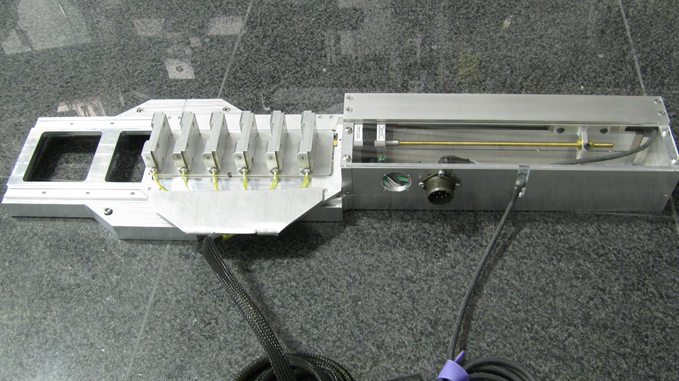
Room temperature multiple sample changer

Room Temperature sample holder

Displex: operating temperature
ranges 5K to 750K
Electric field capability:
-200V to 200V
Axial sample rotation:
360 degrees

Electromagnet: 50mm Gap,max. field=1.15T
Polarization Capability


Stage with capability
to switch between polarized and unpolarized beam configurations and between different
polarizers


RF flipper
3-axes Sample stage

3-axes Sample stage
Incident table and detector table

Incident table showing: sample stage, CCR, Electromagnet, spin
flipper, and collimator slits.

Detector table showing
RF flipper, 3He analyzer

Brookhaven 20 × 20 cm
area detector mounted on its translation stage

Capabilities of the MR Instrument
MR is a dedicated instrument for the investigation of magnetic and nonmagnetic nanosystems. It uses in combination three principle grazing-incidence methodologies: reflectometry, off-specular scattering, and grazing-incidence small-angle neutron scattering (GISANS).
- Grazing-Incidence Scattering is a powerful method for studying magnetism in nanosystems. Scientific and technological applications of artificially created magnetic structures with reduced dimensionalities are of ever-growing interest. Systems that can be studied include contemporary magnetic materials for recording devices, thin films, and multilayers with the interlayer magnetic coupling, bias effects, distribution of magnetic moments, magnetic dead layers, impurity diffusion, and interlayer roughness (chemical and magnetic).
- Specular Polarized and Unpolarized Neutron Reflectometry (PNR and NR) probe the depth-dependent composition in thin films, multilayers, and nanostructures. PNR is sensitive to the magnetic, as well as the nuclear (or chemical), composition of samples.
- Specular reflection probes the depth profile of the mean scattering length density (SLD) averaged over the lateral projection of the coherence length. Specular reflection is measured in slit-like collimation.
- Off-specular scattering, accompanying PNR, is sensitive to magnetic and structural correlations in the plane of thin-film samples, making it a powerful technique for investigating patterned magnetic structures, magnetic domains, and lateral correlations. The off-specular scattering probes the lateral fluctuations within the reflection plane in the micro- to sub-millimeter range.
- Off-specular scattering measures the lateral fluctuations of the SLD around its mean value. At shallow incidence, off-specular scattering, measured in slit-like collimation, probes large lateral scales (micro- to sub-millimeter range).
- Grazing-Incidence Small-Angle Neutron Scattering (GISANS). GISANS probes the lateral fluctuations perpendicular to the reflection plane in the nano- to micro-millimeter range. GISANS is performed in a point-like or pencil collimation.
The versatility of MR is illustrated by the following examples of materials studied that include magnetic nanostructures, thin films and multilayers, biological membranes, and polymer/nanocomposite films. The number of days to collect the neutron data for different experiments varies depending on the lateral size of the sample, the configuration of the instrument, the collimation determined by the scientific case, and the resolution and Q range needed.
Magnetic thin films, multilayers, nanostructures
Interfacial magnetism in complex oxide heterostructures determined with PNR
Oxygen vacancy distributions and dynamics directly control the operation of solid-oxide fuel cells and are intrinsically coupled with magnetic, electronic, and transport properties of oxides. To understand the atomistic mechanisms involved during operation of the cell, it is highly desirable to know the distribution of vacancies on the unit cell scale. Here, we developed an approach for direct mapping of oxygen vacancy concentrations based on local lattice parameter measurements. PNR reveals strong differences in magnetic properties of lanthanum strontium cobaltite model systems induced by different symmetries of the substrates. (Sample size: 10 x 10 mm; polarized neutrons; 3 to 4 hours per neutron spin-state; 4 days in total)
- Kim Y.-M., He J., Biegalski M. D., Ambaye H., Lauter V., Christen H. M., Pantelides S. T., Pennycook S. J., Kalinin S. V., Borisevich A. Y., “Probing oxygen vacancy concentration and homogeneity in solid-oxide fuel-cell cathode materials on the subunit-cell level”, Nature Materials, 11, 888-894, (2012).
- O’Brien L., Erickson M.J., Spivak D., Ambaye H., Goyette R.J., Lauter V., Crowell P.A., Leighton C., “Kondo physics in non-local metallic spin transport devices”, Nature Communications, 5, 49210, (2014).
- Biegalski M.D., Takamura Y., Mehta A., Gai Z., Kalinin S.V., Ambaye H., Lauter V., Fong D., Pantelides S.T., Kim Y.M., He J., Borisevich A., Siemons W., Christen H.M., “Interrelation between Structure – Magnetic Properties in La0.5Sr0.5CoO3”, Advanced Materials Interfaces, 1, 1400203, (2014).
- Spurgeon S. R., Sloppy J. D., Kepaptsoglou D. M., Balachandran P. V., Nejati S., Karthik J., Damodaran A. R., Johnson C. L., Ambaye H., Goyette R., Lauter V., Ramasse Q. M., Idrobo J. C., Lau K. K.S., Jr. S. E.Lofland, Rondinelli J. M., Martin L. W., Taheri M. L., “Thickness-dependent crossover from charge- to strain-mediated magnetoelectric coupling in ferromagnetic / piezoelectric oxide heterostructures”, ACS Nano, 8, 1, 894-903, (2014).
- Chen S.W., Lu X., Blackburn E., Lauter V., Ambaye H., Chan K.T., Fullerton E.E., Berkowitz A.E., Sinha S.K., “Nonswitchable magnetic moments in polycrystalline and (111)-epitaxial permalloy/CoO exchange-biased bilayers”, Physical Review B: Condensed Matter and Materials Physics, 89, 094419, (2014).
- Tronin A.Y., Nordgren C.E., Strzalka J.W., Kuzmenko I., Worcester D.L., Lauter V., Freites J.A., Tobias D.J., Blasie J.K., “Direct evidence of conformational changes associated with voltage gating in a voltage sensor protein by time-resolved X-ray/neutron interferometry”, Langmuir, 30, 4784-4796, (2014).
- Ke X., Belenky L. J., Lauter V., Ambaye H., Bark C. W., Eom C. B., Rzchowski M. S., “Spin structure in an interfacially coupled epitaxial ferromagnetic oxide heterostructure “, Physical Review Letters, 110, 237201, (2013).
- Schumacher D., Steffen A., Voigt J., Schubert J., Bruckel T., Ambaye H., Lauter V., “Inducing exchange bias in La0.67Sr0.33MnO3-delta/SrTiO3 thin films by strain and oxygen deficiency”, Physical Review B: Condensed Matter and Materials Physics, 88, 144427, (2013).
- The magnetic tunnel junction (MTJ) with a perpendicular magnetic anisotropy (PMA) for a small critical current density for current-induced magnetization switching―a pathway for current-induced spin transfer torque devices
- The PMA in the CoFeB sandwiched by MgO and Ta layers has been investigated by using anomalous Hall effect and PNR. It is found that the interfacial anisotropies at both MgO/CoFeB and CoFeB/Ta interfaces contribute to the observed PMA. A large PMA in the MgO/CoFeB/Ta trilayers is also related to the low magnetization of CoFeB deposited on MgO, which is confirmed by PNR measurements. (Sample size: 12 x 12 mm, polarized neutrons, 3 to 4 hours per neutron spin-state, 4 to 5 days in total)
- T. Zhu, Y. Yang, R. C. Yu, H. Ambaye, and Valeria Lauter, “Large anomalous Hall effects in a ferromagnetic layer sandwiched by MgO and Ta layers,” Applied Physics. Letters 100, 202406 (2012).
Giant saturation magnetization Fe16N2 films: the combination of the large magnetocrystalline anisotropy and its giant saturation magnetization gives us a new direction for the synthesis of rare-earth-element free magnets in the future.
We have demonstrated a general framework for realizing and modulating perpendicular magnetic anisotropy in a rare-earth-element and heavy-metal-free material system. Using GaAs(001)/Fe(001) template, we have developed a synthesis scheme to produce epitaxial body center tetragonal Fe-N with (001) texture. By varying the N doping concentration, the crystal tetragonality (c/a) can be tuned in a relatively wide range. It is found that the Fe-N layer developes a strong perpendicular magnetic crystalline anisotropy (MCA) as it approaches the iron nitride interstitial solubility limit. Further annealing significantly improves the MCA due to the formation of chemically ordered Fe16N2. In addition to realizing an MCA up to 107 erg/cm3, the spin polarization ratio (P ∼ 0.52), as probed directly by a point-contact Andreev reflection (PCAR) method, even shows a moderate increase in comparison with normal metal Fe (P ∼0.45). (Sample size: 10 x 10 mm, polarized neutrons, 3 to 4 hours per neutron spin-state, 3 to 4 days in total)
Nian Ji, M. S. Osofsky, Valeria Lauter, Lawrence F. Allard, Xuan Li, Kevin L. Jensen, H. Ambaye, Edgar Lara-Curzio and Jian-Ping Wang, “Perpendicular magnetic anisotropy and high spin polarization ratio in epitaxial Fe-N thin films, ” Physical Review B 84, (2011) 245310.
Intrinsic magnetic properties of hard-soft heterostructures.
Interestingly, for Fe/Sm-Co spring magnets, the magnetic properties of interfaces play critical roles in achieving the synergistic function of magnetic heterostructures. In particular, it has been reported that compositionally intermixed interfaces may enhance the energy storage density of exchange-spring magnets consisting of high-magnetization but soft Fe phase and high-anisotropy Sm-Co phase, which can be potentially used as ultra-strong permanent magnets. The nanoscale variations of the micromagnetic properties at the interface are believed to be the underlying mechanism but could not yet be probed in a quantitative manner. Here we show that it is possible to determine quantitative, spatially resolved profiles of micromagnetic properties from complementary studies of polarized neutron reflectometry (PNR) and micromagnetic simulations.
Y. H. Liu, J. S. Jiang, H. Ambaye, S. G. E. te Velthuis, “Magnetization profiles in Fe/SmCo Spring Magnets with Graded Interfaces,” Physical Review B 83, (2011) 174418. (4 Days)
Organic Spin-Valve Multilayers
The electronic, magnetic, and structural properties of Ni80Fe20 and Co electrodes at LiF and aluminum tris(8-hydroxyquinoline), or Alq3, interfaces were investigated with photoemission spectroscopy and polarized neutron reflectivity measurements. When LiF was deposited onto Ni80Fe20 films and Co was deposited onto thin LiF layers, the work function of both metals decreased. Polarized neutron reflectivity measurements were used to probe the buried interfaces of multilayers resembling a spin-valve structure. The results indicate that LiF is an effective barrier layer to block diffusion of Co into the Alq3 film.
Greg Szulczewski, Jonathan Brauer, Edward Ellingsworth, Justin Kreil, H. Ambaye, and V. Lauter, “The role of LiF tunnel barriers on the performance of organic spin-valves” Journal of Applied Physics 109, 07C509 (2011). (2 to 3 Days)
Shape memory alloy
The first results from in situ polarized neutron diffraction experiments on a time-of-flight instrument at a spallation source. Magnetic-field-induced rotation of electron spins in a Ni-Mn-Ga single crystal was measured. The difference in intensities measured with polarized neutron spin-up and spin-down is proportional to the field-induced magnetization of the crystal. The polarized neutron measurements indicate that the magnetic form factor for the 3d electrons of Mn in Ni-Mn-Ga is lower than the value reported earlier for an ideal spherical symmetry of electronic distribution.
A. Pramanick, V. Lauter, X.-L. Wang, K. An, H. Ambaye, R. Goyette, J. Yi, Z. Gai, and A. D. Stoica, “Polarized neutron diffraction at a spallation source for in-situ magnetization studies,” Journal of Applied Crystallography, submitted. (1 to 2 Days including the modification of the configuration for diffraction experiment)
Materials Science
Polyelectrolyte/Nanoparticle Multilayers
Here, we demonstrate the exponential LbL (e-LbL) growth of poly(ethyleneimine)/SiO2 nanoparticles (PEI/SiO2) bicomponent thin films that consist mostly of SiO2 nanoparticles (over 90 wt % obtained by thermogravimetric analysis). We show that the LbL growth of the PEI/SiO2 system significantly depends on the pH of the PEI and the SiO2 solutions. The e-LbL growth will only occur when the film is deposited with PEI at a high pH and SiO2 at a low pH. The exponential growth was characterized using a quartz crystal microbalance, atomic force microscopy and scanning electron microscopy imaging, and neutron reflectometry.
Chunqing Peng; Yonathan S. Thio; Rosario A. Gerhardt, Haile Ambaye, and Valeria Lauter, “pH-Promoted Exponential Layer-by-Layer Assembly of Bicomponent Polyelectrolyte/Nanoparticle Multilayers,” Chemistry of Materials 23, 4548 (2011). (4 Days)
Layered Organic compounds on Mineral Surfaces
Organic carbon (OC) stabilization in soils plays a significant role in the global C cycle; therefore, the understanding of the structure and function of the OC-soil mineral interface is of high importance. To study the interface, films of simple OC compounds and natural organic matter (NOM) were deposited onto a soil mineral analogue (Al2O3) using spin coating and were exposed to humidity. The thickness, density, and structure of the films were studied using a depth-sensitive technique of neutron reflectivity.
Melanie Mayes, Sindhu Jagadamma, Haile Ambaye, Loukas Petridis, and Valeria Lauter, “Neutron Reflectometry Reveals the Internal Structure of Natural Organic Matter Deposited onto an Aluminum Oxide,” Geoderma, submitted. (3 Days)
Related Research Highlights
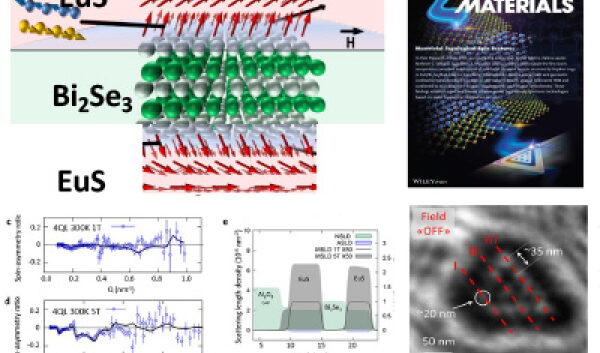


April 8, 2022
Quantum Disordered State of Magnetic Charges
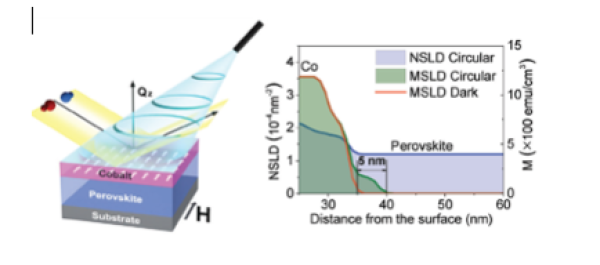
January 4, 2022
Optically Induced Magnetization in Metal Halide Perovskite
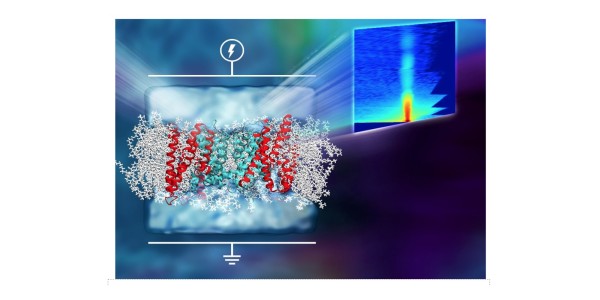
February 23, 2020
Voltage Dependent Structure of Ion Transport Channels in Membranes

February 2, 2020
Symmetry Mismatch Controls Magnetism in a Ferroelastic Film