Extended Q-Range Small-Angle Neutron Scattering Diffractometer

Mission Statement
Enable nanoscale characterization of materials from physics, chemistry, biology and the materials sciences to better understand the relationship between structure and function.
Instrument Description
The EQ-SANS Diffractometer is designed to study non-crystalline, nano-sized materials in solid, liquid, or gas forms such as polymers, micelles, proteins, and other large biological molecular complexes in solution. It offers high neutron flux, broad dynamic Q-range, and overall wide Q-coverage.
EQSANS is located on beam line 6, viewing the top-downstream, coupled supercritical hydrogen moderator. It has a curved multichannel beam bender to avoid the direct line of sight of the moderator, which cleans out the background from the prompt neutron pulse quite effectively. Three bandwidth choppers on the EQ-SANS define a clean wavelength band 3 – 4.3 Å wide at 60 Hz depending on the detector distance being employed. The instrument can operate at 30 Hz to produce two neutron wavelength bands, which provides a wider dynamic Q-range at a single detector distance setting. At present, the instrument has a 1 × 1 m low-angle detector, which could be expanded to 1 × 1.4 m. The low-angle detector can travel along the beam inside the scattering tank, giving a variable sample to detector distances of 1.3 to 9 m.
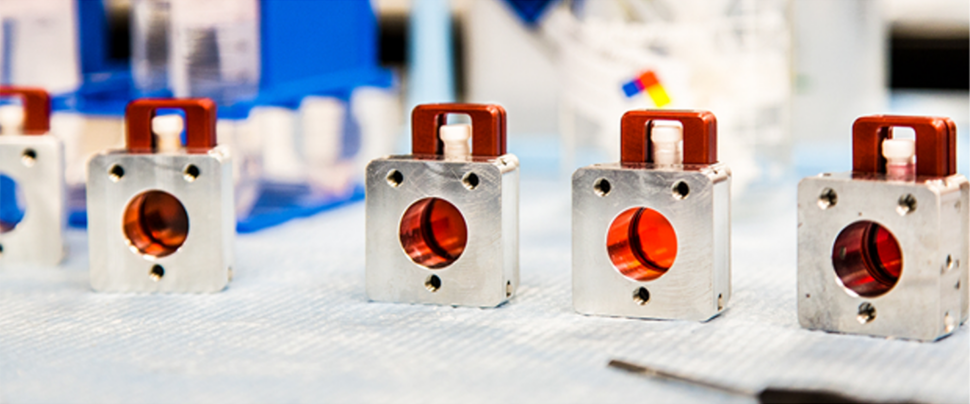
The available sample environment is an automated sample changer that can be controlled between 5 and 60°C and can accommodate 15 banjo cells or 10 demountable titanium cells. An extended temperature range of 5°C to 130°C can be achieved with improved precision and ramp rates via Peltier units capable to accommodate 12 banjo cells. A furnace is available that can provide temperatures up to 330 °C. A sample tumbler for studying colloids that settle out of solution, and a relative humidity generator that can interface with a goniometer for performing GI-SANS measurements are also available.
Applications
Polymer and colloidal systems
- Block copolymers and dendrimers
- Micelles and emulsions
- Polyelectrolytes and ion distribution at solid-liquid interfaces
Materials science
- Simultaneous study of domain and crystalline structures
- Crystallization and precipitation
- Nanoparticles
Life science
- Solution structures of proteins, DNA, and other biological molecules and molecular complexes
- Protein-protein and protein-ligand interactions, kinase regulation
- Protein-membrane interaction
- Materials for drug delivery
Earth and Environmental Sciences
- Pore structure in soils
- Structure of geologic materials
Specifications
| Moderator | Coupled supercritical hydrogen |
| Source-to-sample distance | 14m |
| Sample –to-detector distance | 1.3 ~ 9m |
| Detector size | 1m x 1m |
| Bandwidth | 3-4.3A |
| Integrated flux on sample | ~ 10^7 – 10^9 n/cm2/s |
| Q range | 0.002 < q < 1.4 A-1 |
| Detector resolution | 5.5 x 4.3 mm |
EQ-SANS Instrument Team
Please select link below to email the instrument team. Be sure to include your name and email address.
Documentation for EQ-SANS
The beam line staff is committed to provide users with analyzable data and the tools to analyze small-angle neutron scattering data at the conclusion of the experiment.
In general, our expectation is that a successful experiment will produce a publication. Users are encouraged to outline a compelling science case for the beam time in their proposals, and to request sufficient beam time (2 ~ 4 days) to succeed. Users who wish to conduct a “proof-of-principle” experiment should request one day.
Proposals will be evaluated for (1) scientific quality and credibility of the project plan to succeed, and (2) compelling need for neutron beams.
Please contact the instrument staff for additional guidance.
Reference Documents
- The Suite of SANS Instrument at ORNL,J. Appl. Cryst.51, 2, 1-7 (2018).
- The EQ-SANS Diffractometer at the SNS, J. Appl. Cryst. 43, 1068-1077(2010). (.pdf)
- Data Processing for the SNS EQ-SANS Diffractometer,Nucl. Instrum. Meth. A647, 107-111 (2011). (.pdf)
- Neutron Optics Optimization for the EQ-SANS Diffractometer (.pdf)
- Chopper Design and Operation for the EQ-SANS (.pdf)
- Optical Components for the EQ-SANS Diffractometer (.pdf)
- Supplement documentation (.pdf)
Manuals
- EQ-SANS Data Acquisition (.pdf)
- EQ-SANS Data Reduction with drtsans
- Quick Reference for Script Mode in form of pdf and the following tutorial videos about setting up the conda environment, obtaining the useful tools and performing the reduction
- Quick Reference for Working in MantidWorkbench in form of pdf and tutorial video
- Quick Reference for Working with Jupyter Notebooks in form of pdf
- Quick Reference for Transfering Files from the Analysis Clusterin form of pdf and tutorial video
- Quick Reference for the Data Reduction Parameters in form of pdf
Frequently Asked Questions
- Why is the beam not available?
Although the SNS facility operates 7 days a week, 24 hours a day during normal operations, there are scheduled periods during operations cycles when SNS does not produce neutrons for users (maintenance periods and accelerator physics schedules). It is normal procedure that no data can be collected during these periods. You can see the run schedule and other operating information on the Operating Status page. listing of these periods.
- How much sample do I need?
Typical banjo cell of 1 mm thickness takes about 0.35 mL. However, preparing enough sample volume is always a good practice. Demountable Ti-cell may take a little more than banjo cells of same thickness.
- How large is the beam?
Various beam diameters are available. (1mm, 2mm, 5mm, 8mm, 10mm, 12mm)
- What do I do if I want my samples returned to me?
If you are present at SNS when your samples are run and they have been cleared by the Radiological Control Group, you can carry them back with you. If you are not present, or if you leave before your sample is completed, we can ship it back to you once it has been cleared by the Radiological Controls Group, provided we have a complete shipping address (with phone number), a complete material safety data sheet (MSDS) for the sample, and a FedEx (or other shipping service) account number to which the shipment will be billed.
- Can I monitor progress of my experiment?
Please visit monitor.sns.gov and log-in using ucams/xcams id and password and select EQ-SANS to see the current status of the instrument and measurement. Live view of the detector is not yet supported officially.
Alarm Demos (avi/wmv video)
- High Radiation Alarm (6 MB)
- Oxygen Deficiency Hazard Alarm—Inside Cave (2 MB)
- Oxygen Deficiency Hazard Alarm (5 MB)
- Radiation Alarm (7 MB)
- Oxygen Deficiency Hazard Detection System Failure Alarm (4 MB)
- Radiation Detection System Failure Alarm (3 MB)
- Radiation Safety Emergency Stop Button Operation (1 MB)
- Personnel Protective System Fault Alarm (1 MB)
Resources
Images of the EQ-SANS Instrument

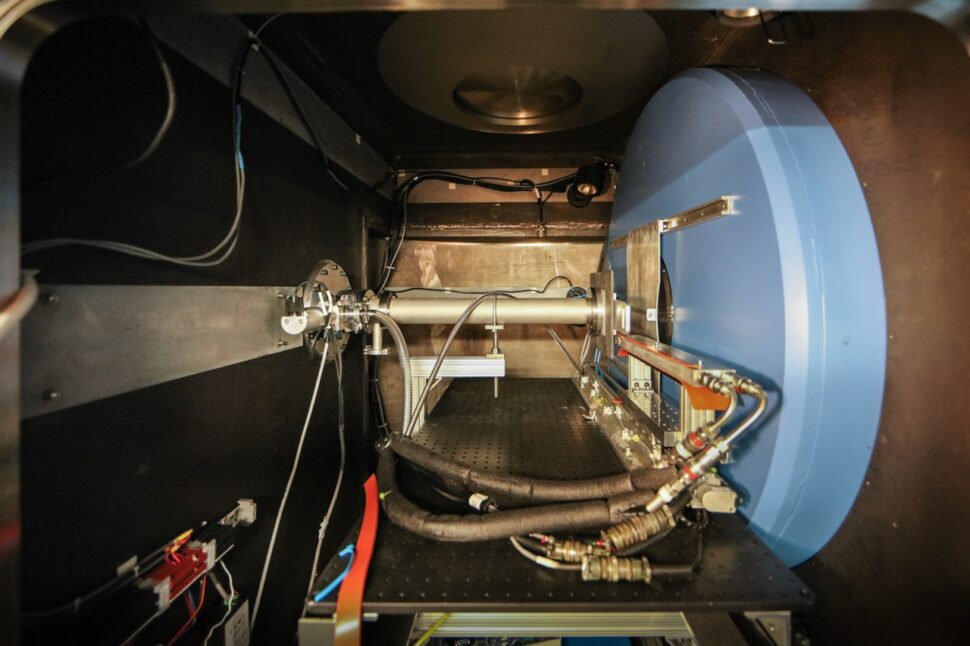
view along the beam line

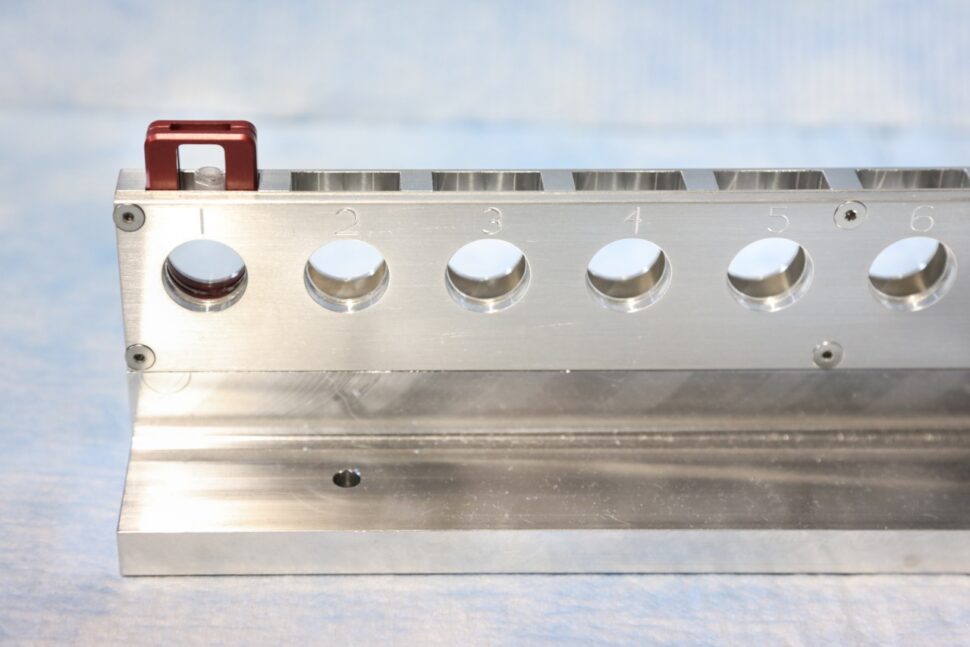
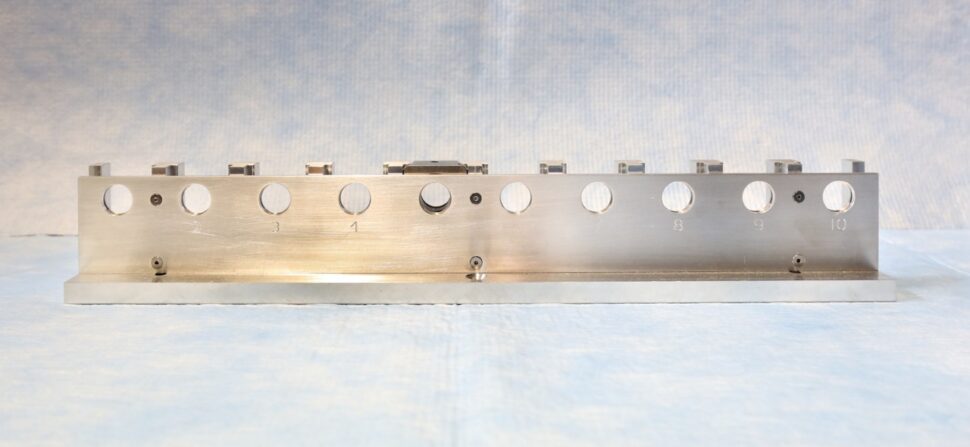
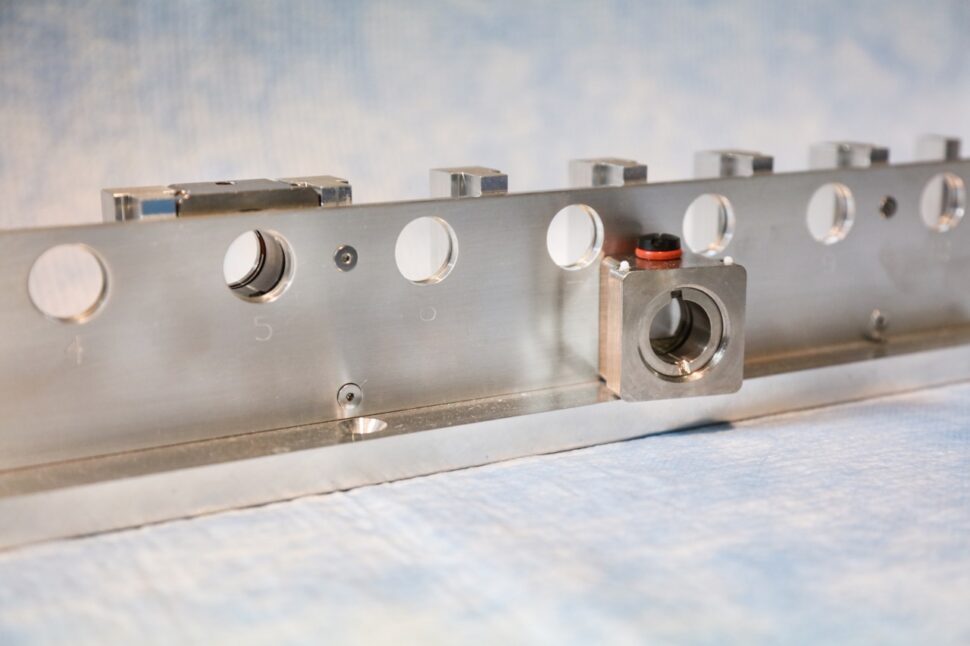
standard sample environment
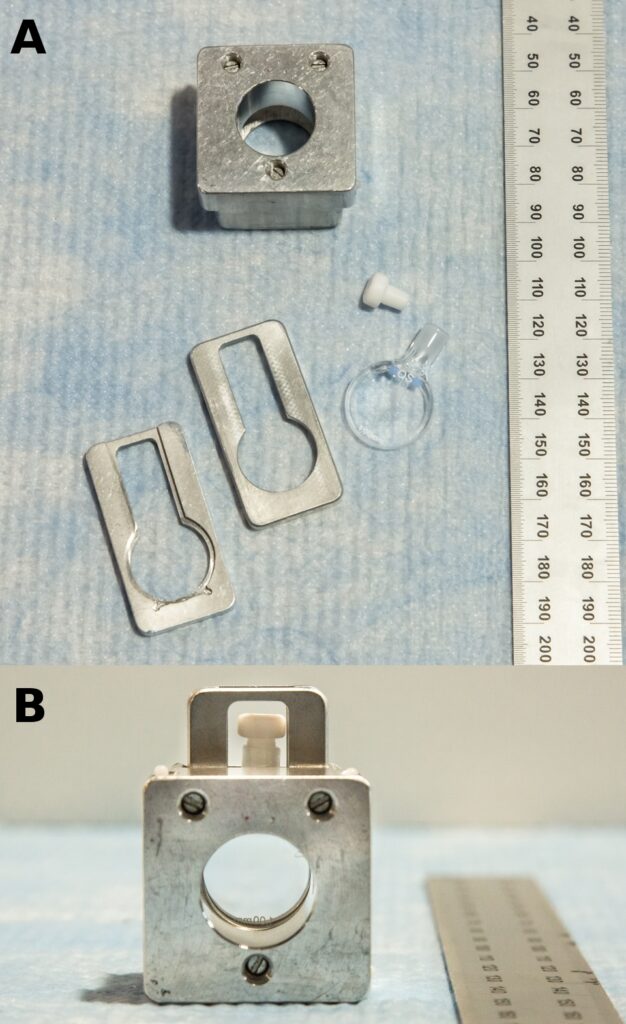
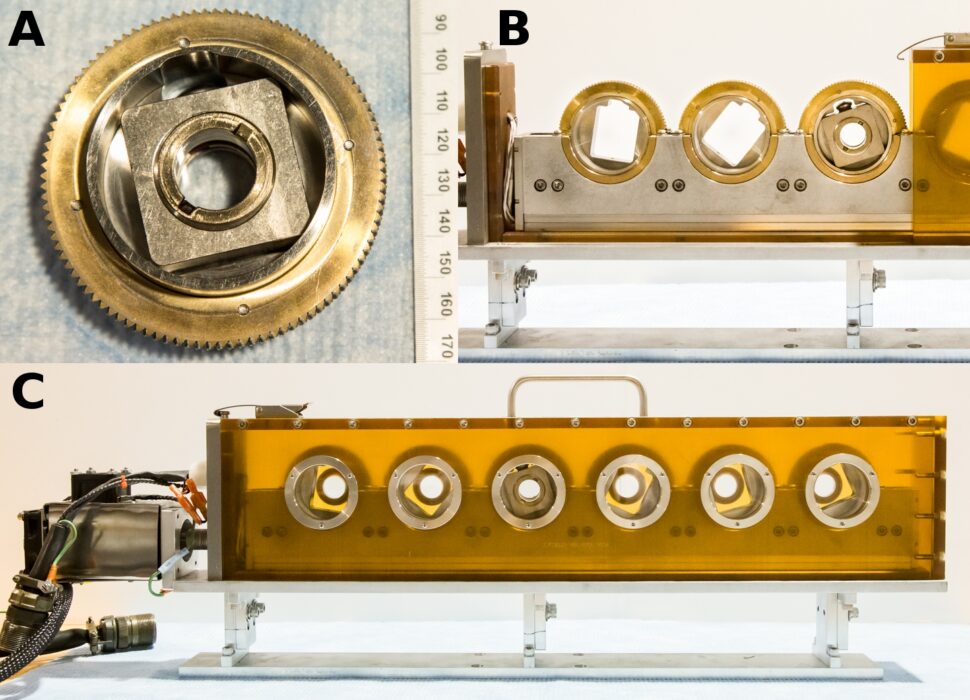
Aluminum banjo cell holder (A) Disassembled (B) Assembled
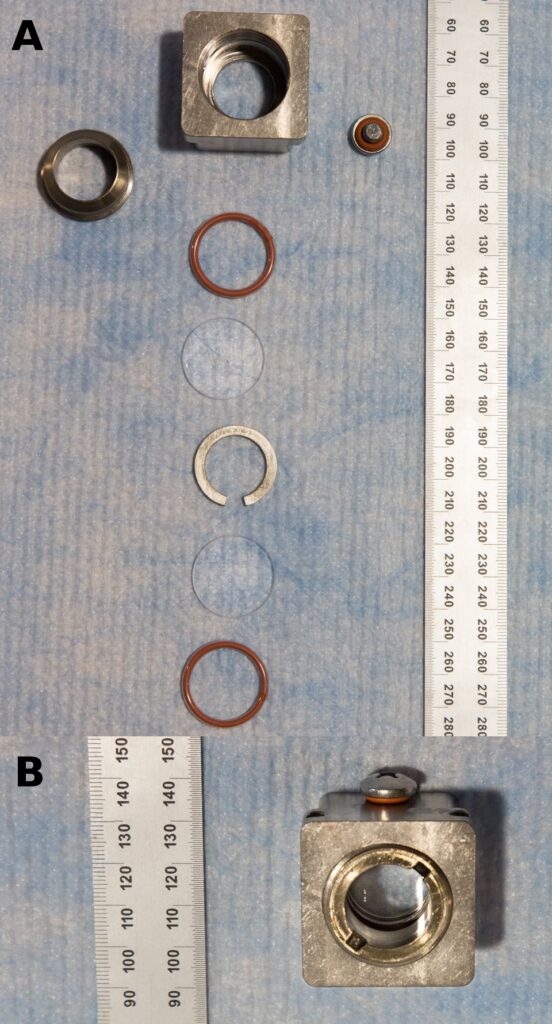
Titanium Cell (A) Disassembled (B) Assembled
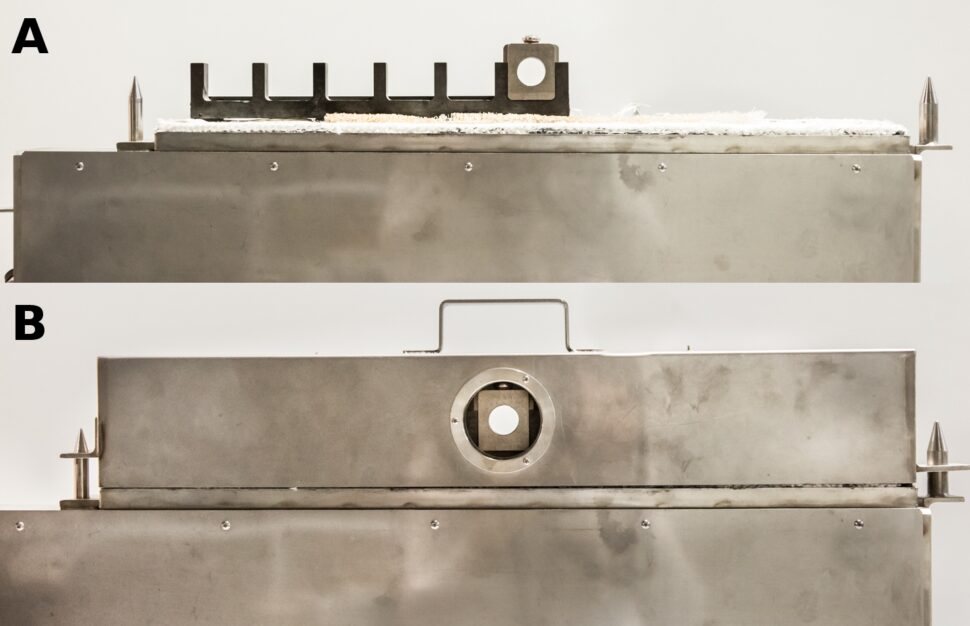
330 °C furnace. Ti sample cell in a sample position (A)without the lid (B) with the lid
Sample tumbler. Ti sample cell (A) in the geared adapter (B) mounted in a sample position and (C) with
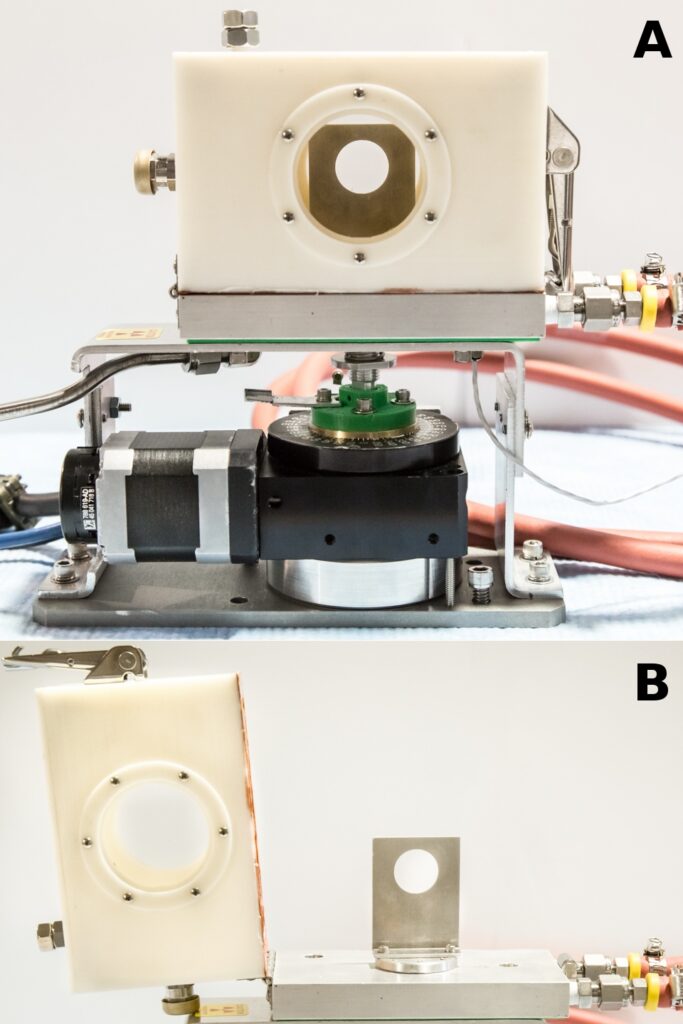
Relative humidity cell (A) closed (B) with the lid open showing the thin film mount
Mail-In Program
- Results of the mail-in SANS measurements should facilitate or be critically important to imminent submission of a publication.
- Mail-in proposals not exceeding one page may be submitted throughout the year.
- Measurements will be allocated time on a first-come/first-served basis up to the maximum amount of mail-in time available.
- An experimental status report or a publication reference is required before a 2nd mail-in proposal will be approved from the same research group.
- For planning purposes, the allowed beamtime per proposal can be considered as 8 hours.
- A proposal may request up to 12 samples in banjo cells or 7 samples in demountable Ti-cells. Users may specify temperatures in the range between 20 oC and 60 oC. No other sample environment is available for mail-in measurements.
- Preloaded and labeled samples in either banjo cells or Ti-cells should be shipped to the beamline before the beamtime starts along with electronic and paper documentation of sample names and contents. The samples must match the samples identified in the proposal.
- Sample cells are not provided. Product information of banjo cells and the drawing of Ti-cells will be provided upon request. Samples in the sample cells will be returned to the user.
- A measurement plan prepared by users is required. Excel template will be available at the instrument webpage.
- Data will be reduced following standard data reduction protocol. The reduced data will be e-mailed to users within 2 weeks of the completion of the measurements.
- Data analysis is not provided by the mail-in program.
- If the project does not fit the narrow description of the mail-in program or requires more instrument scientist support, users are encouraged to submit a General User Program proposal.
- Please use the spread sheet template available in the EQSANS webpage (mail-in program) to plan the measurement. And copy and paste the measurement table into this proposal.