Biological Small-Angle Neutron Scattering Instrument
Mission Statement
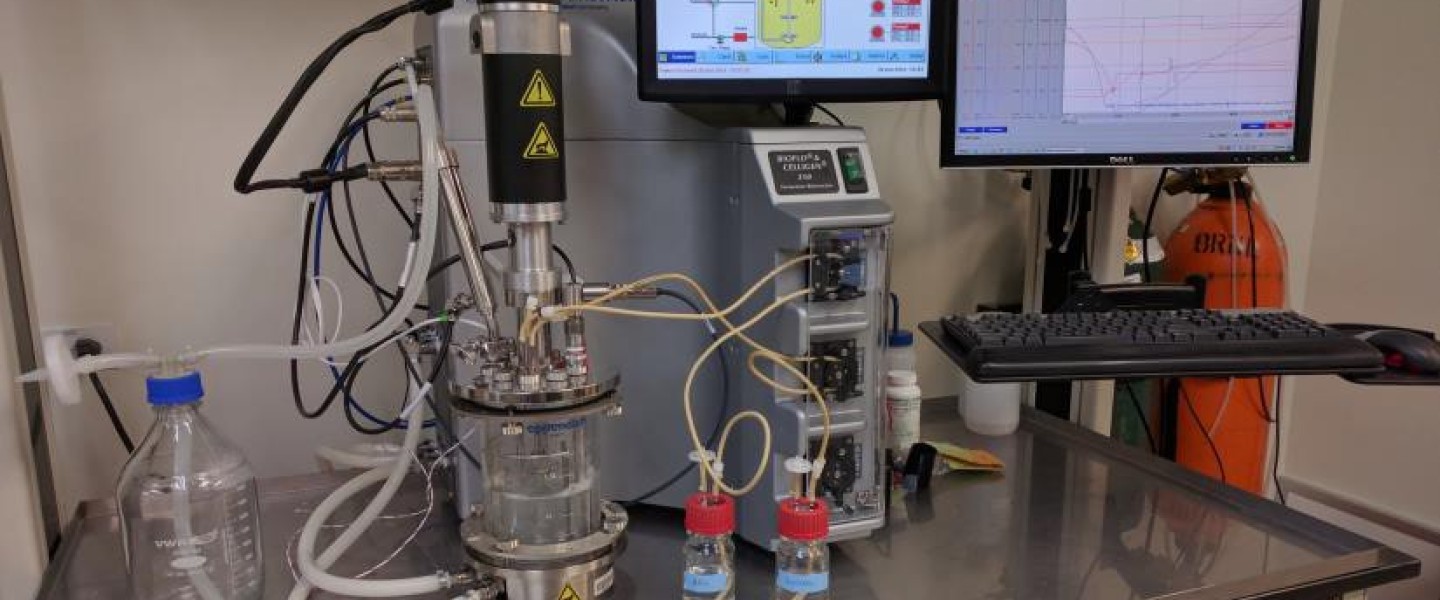
Bio-SANS is designed and optimized for analysis of the structure and function of complex biological systems.
Instrument Description
The Bio-SANS instrument is dedicated to structural analysis of complex biological systems. It is part of the Center for Structural Molecular Biology (CSMB) at Oak Ridge National Laboratory along with the Bio-Deuteration Laboratory (BDL). The Bio-SANS instrument, with its dual detector system, offers users a wide dynamic Q-range (~300) in a single exposure. Users can avail a variety of sample environments for static and in-operando measurements of biomacromolecules and biomaterials.
Applications
- Biomacromolecules and their assemblies
- Protein/nucleic acid/lipid complexes
- Biomembranes
- Membrane proteins
- Liposomes
- Nanodiscs
- Complex Systems
- In-Cellulo studies
- Viruses
- Biomass & Biofuels
- Plant cell wall structure & dynamics
- Biomimetic/Bioinspired Systems
- Microemulsions
- Micellar systems
- Gels & fibers
Specifications
| Wavelength | 6 < λ < 25 Å |
| Wavelength resolution | Δλ ⁄ λ = 9 – 45% |
| Q range | 0.0009 – 1 Å-1 |
| Sample-to-detector distance | 2.25 – 15.5 m |
| Detector | 2-D linear position-sensitive detector |
| Detector size | Main detector 1 × 1 m² Wide angle detector 1 x 0.8 m² |
| Detector resolution | Main detector 192 × 256 pixels Wide angle detector 160 x 256 pixels |
| Max count rate | 1 MHz |
BIO-SANS Instrument Team
Please select link below to email the instrument team. Be sure to include your name and email address.
Contact the Bio-SANS Instrument Team
Venky Pingali – Instrument Scientist
Wellington Leite – Instrument Scientist
Alan Hicks – Computational Instrument Scientist
Volker Urban – Large Scale Structures Section Head
Felicia Gilliland – Scientific Associate
Biswas S.; Pingali S.V.; Tran K.T.; Huang Q.; Zuo X.; Xu A.Y. “Mechanistic Insights into the Formation of Complex Coacervates in Crowded Environments”, Biomacromolecules, 27, 6214–6226, 2026
Zhang Q.; Keller M.J.; Leite W.; Hettich R.L.; O'Neill H.M.; Zhang H.H. “Controlled Deuteration of Phosphatidylcholine Biosynthetically Produced from Engineered Escherichia coli for SANS Studies”, ACS Omega, 11, 50102–50111, 2026
Okuda A.; Inoue R.; Kurokawa M.; Martel A.; Porcar L.; Osaki R.; Fukuzawa K.; Weiss K.; Pingali S.V.; Urade R.; Sugiyama M. “Integrated analysis with iCM-SANS, SAXS and MD simulations for dynamics of multi-domain proteins”, Journal of Applied Crystallography, 59, 1270-1281, 2026
Klisch S. “Effects of Molecular Architecture, Concentration, and Applied Perturbations on the Structure and Dynamics of Polymer- and Membrane-Based Nanoparticles”, 2026
Sarma N.A.; Grigoropoulos A.; Arslan M.; Salzman E.E.; Christakopoulos P.; Zhang H.H.; DeFrates K.G.; Engstrom J.; Bonnesen P.V.; Pingali S.V.; Xu T.; Messersmith P.B.; Omar A.K. “Tunable Nanostructures from Inverse Surfactants”, Macromolecules, 59, 8640-8656, 2026
Eckman N.; Saouaf O.M.; Jons C.K.; Pingali S.V.; Prossnitz A.N.; Kasse C.M.; Mai D.J.; Appel E.A. “Small-Angle Neutron Scattering Reveals Structural Hierarchy of Polymer– Nanoparticle Hydrogels”, Macromolecules, 59, 5398-5407, 2026
Agyemang E.; Van Wirt R.; Walls C.; Joseph T.T.; Tiruvadi-Krishnan S.; Grothusen J.; Zhang Q.; Hicks A.; Leite W.; Osti N.C.; Mamontov E.; O'Neill H.M.; Liu R.; Lamichhane R. “Activation dynamics of a water-soluble human mu-opioid receptor”, Journal of Biological Chemistry, 302, 111393, 2026
Information and Guidance for Bio-SANS Users
Announcements
SAXS and SANS Joint Access Pilot Program
A pilot program for joint access to SAXS and SANS has been established between the Bio-SANS beam line at HFIR and the state-of-art LiX beam line at NSLS-II.
The users still submit beam time applications through existing regular proposal mechanisms with either facility (PASS system at BNL; IPTS system at ORNL). In the proposal system, the user needs to choose the additional facility desired to access and to justify the request for the other facility explicitly in the proposal text. In particular, they would address the necessity of using the other kind of probe.
Proposals may be accepted at one facility and declined for the other facility. Only proposals approved at both facilities are eligible for the pilot joint access program. Beam line scientists from both beam lines will coordinate with users for beam time allocation and beam line access.
For more information on the program, please contact Bio-SANS beam line scientist Wellington Leite ([email protected]).
Data Reduction Quick References
Bio-SANS Data Reduction: Jupyter Notebook
Bio-SANS Data Reduction: Parameters
Tutorials
JoVE Tutorial
Ryan C. OliverSwe-Htet NaingKevin L. WeissSai Venkatesh PingaliRaquel L. LiebermanVolker S. Urban
Coming soon
Related Research Highlights


June 15, 2023
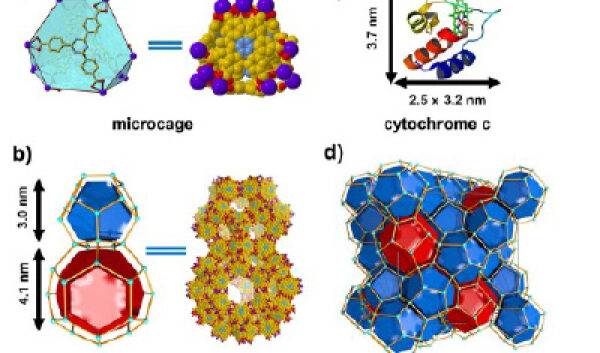
Protein Arrangement in Metal-Organic Framework